Showing posts with label Food. Show all posts

Tuesday, February 12, 2013

Freezer Meals That Work

So in the past year, I have become a huge fan of freezer meals. Not only do I love the concept of having a meal on hand on those days I do NOT feel like cooking, but I also love that if I'm ever called upon to take a meal to someone it doesn't stress me out because I know I always have at least one meal in my freezer that I just have to cook.

However, I'm not a huge fan of a lot of the freezer meal recipes. Mostly because they are things my family would never eat. So slowly I've been finding recipes that we like that are freezable. Here are a few of our favorite freezer meal recipes and a few things I've learned along the way:


Baked Chicken Taquitos (Our Best Bites) -- Our Ultimate Favorite!

Oh my heavens, we could eat these taquitos once a week! I have made them countless times and they never get boring. Besides being so easy to make, I love how when you pull them out of your freezer they only take 25 minutes to cook, where most of my other freezer meals take almost an hour. I also double the batch and then freeze them in bags of how many we'll eat in one meal. So I usually get at least 3 meals out of it for our family of three (and my 4-year-old eats TWO without complaint!). Everyone who has had them (and believe me, I've fed a lot of people these) have liked them. You can always count on Our Best Bites.

To find the recipe, click here.


Freezer Meal Tip #1:
Don't freeze cooked potatoes. When you thaw and re-cook them they will be very very mushy. But if the potatoes aren't the main part to the meal, you can add them almost cooked to the recipe when you pull it out to re-heat it (I'm thinking of soups here). But since I like the idea of just dumping the meal in the crockpot or putting it in the oven, I just don't do potato freezer meals.


Tomato-Basil Parmesan Soup (365 Days of Crockpot)

Pinned Image
Photo credit: inthekitchenandonthecouch.blogspot.com

So I have to start out by saying that my husband doesn't like parmesan-y things and I don't like tomato soup, but we BOTH like this recipe. This recipe is SO incredibly easy (can you tell I'm a lazy cook?), especially if you cook it in the crockpot, let it cool and then freeze it to warm up when you want to eat it another day. What I usually do is make the full batch and have half for dinner that night and freeze the rest. I've made it with 1% milk or half-and-half and I would suggest using whatever you prefer (or have on hand!). It doesn't make that much of a difference. I would suggest that when you warm up the freezer soup that you add a little milk to it when it's reheating. Otherwise it is kind of watery. Also, I use the Parmesan cheese in a can and I only put in 1/2 cup.

To find this recipe, go here.


Freezer Meal Tip #2:
Always write the date of when you made the meal, the name of the meal, and the cooking instructions on the foil or bag. Then if it gets shoved in the back of your freezer, you will still know what it is and whether it's still good. As a general rule of thumb, freezer meals are good for a couple of months.


Baked Ziti/Penne (My sister-in-law DeAnn)

This one was not written as a freezer meal, but I took a chance and found out that it tastes just the same. This is a nice variation of spaghetti/lasagna and my husband has loved this dish ever since his sister-in-law made it for him ages ago. This recipe makes a TON of food, so I usually split it up into two meals. We also can our own spaghetti sauce, so that is why it's listed in pints. Here's the recipe:
Sorry I have a crappy camera. I promise it looks appetizing.

1 lb. ziti or penne pasta
1 small onion, diced
1 lb. ground beef
3 pints spaghetti sauce
8 slices provolone cheese
1.5 cups sour cream
6 oz. mozzarella cheese, grated
2 Tbsp. parmesan cheese, grated
     OR a handful of fresh shredded
     parmesan cheese


Cook the ground beef with the onion. Drain any excess grease. Cook the pasta and drain. Add spaghetti sauce to beef mixture and simmer for 10 minutes. Using the end of a cube of margarine (or cooking spray for me), lightly grease the bottom of two pans: an 8 x 11 and an 8x8. Divide the following instructions between both pans:

Pour in half of the pasta and spread evenly. Add the provolone cheese (the slices will overlap a bit). Spread the sour cream across provolone cheese. Pour in half of the spaghetti sauce and spread evenly across the pan. Add the rest of the pasta. Sprinkle the mozzarella cheese across the pasta. Layer the rest of the spaghetti sauce and then sprinkle on the parmesan cheese. Bake at 350 for 30-45 minutes or until hot and bubbling.

IF FREEZING: Instead of cooking, put tin foil over it and freeze with these instructions written on it: Thaw and bake at 350 for 1 hour, until hot and bubbling in the middle.


Freezer Meal Tip #3:
Store-bought breads freeze and then thaw very well. It doesn't matter if they're wheat or white. I buy the hoagie-type rolls that come in a big bag from Sams or Costco and then freeze them in smaller quantities in gallon ziplock bags with the date of when I bought them written on the front. I pull out 3 of them at a time to slice in half with butter and garlic salt as our french bread to go with the Baked Penne recipe above.


Crockpot Cantonese Sweet & Sour Chicken (Food.com)
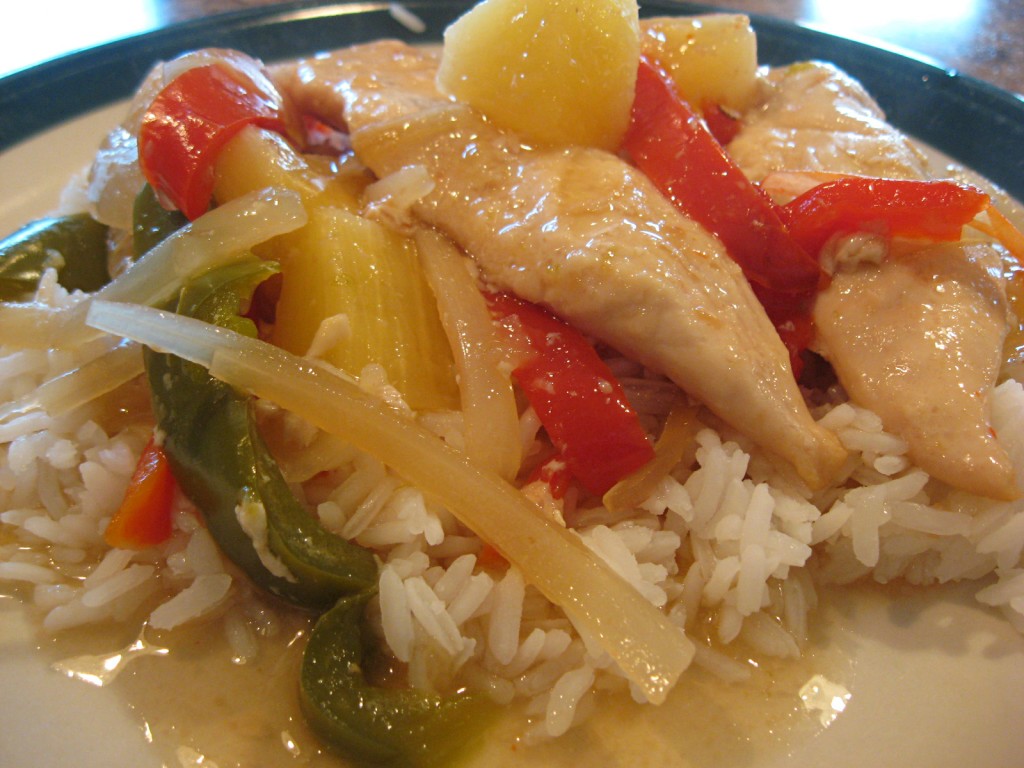
 
crockpot chicken sweet and sour done
Photo Credit: http://eatathomecooks.com

Another super easy one and it cooks in the crockpot too when you pull it out of the freezer. Not as good as some of the sweet and sour chicken I've made, but I'll take it over standing in front of the stove on a hot summer day. If you're going to freeze it, just cut all the vegetables and chicken, and mix into a gallon ziplock bag with the sauce. But freeze the drained pineapple SEPARATELY in a quart ziplock bag. You don't want to add the pineapple to the crockpot until the last hour.

To find this recipe, click here.


Freezer Meal Tip #4:
When freezing ziplock bags, put a cookie sheet under it while it freezes. Believe me, you'll thank me later when the bag you thought was sealed tightly, really wasn't.

Wednesday, August 22, 2012

How-to: Canning Green Beans

Right now is canning season for me. Unfortunately it comes at the hottest time of the year and I don't have AC. It can be a little miserable, but I consider it worth the sweat.

I learned how to can from my in-laws. Ironically, my mom does can as well, but I guess in my teens I never had the patience to learn. The most important thing to know in canning is that you have to follow the instructions to the letter. If you don't, the best that can happen is your stuff doesn't seal right, the worst that can happen is you get very very sick eating what you canned.

Now that I've totally freaked you out about canning, I'm here to tell you that I've canned for 6 years now and I've never gotten sick. Or any of my family. If I can do it, you can do it.

So, without further ado, here's a look at canning green beans.
First of all, you'll need a pressure canner (the big pot to the right that has a pressure gauge lid, it's pictured below in its entirety if you have no clue what I'm talking about), a big stock pot, a little pot for lids, jars, lids, a funnel, a ladle, salt, and of course green beans.

Fill your stock pot full of water and turn it on high so it will be boiling by the time you need it. Also fill the pressure canner with water until it's a couple inches deep. I add a little vinegar to the water as well because we have hard water. This prevents my jars from being covered in a white film that you can get from canning with hard water. Turn this burner on high as well.
Now onto the beans. Start out by snapping both ends of your green beans. You'll also need to snap them into about 2-in pieces so they fit better in the jars and so you can eat them easily of course. Then wash your green beans well. I wash them at least twice. These lovely green beans came straight from our garden.

After they are washed, fill your jars with the beans. Make sure you shake the jars while you're filling them so you can get as many green beans in there as possible. When they cook they shrink a little and you don't want your canned jars to be half-water.
Fill the jars to the bottom ring with the green beans. Then add 1 tsp. salt per jar (if you're using quart jars. If they are pint jars you'll need 1/2 tsp salt per jar). Now would be a good time to fill your little pot halfway with water and put your jar lids in it. Turn it on medium heat to get your lids hot and ready.
Using a funnel, fill your jars with boiling water, leaving at least 1/2 inch of space between the top of the water and the very top of the jar.
Now take a knife and run it down periodically around the jar's insides. This helps get any air bubbles out so the greens beans fit in the jar better. After you do that, make sure you wipe the lip of your jar with a paper towel to get off any water or salt you may have gotten on it (if you don't, there's a possibility your jars won't seal).
Now grab one of your hot lids (I love my little canning magnet!), put it on and then tighten your ring on. Interesting enough, it's better if you don't tighten it the tightest it can go. My husband helped me once by doing the tightening part and half of those jars didn't seal. We figured out it's because he tightened them so tight that there wasn't room for the lid to pop. So from now on, weak sauce here is the one who tightens the rings. :)
Put your jars in the pressure canner and put on the lid, making sure to twist it so it's completely closed and tight. By the way, my canner is big enough that if I'm canning pints, I can stack them on top of each other and fit 20 pints. If I'm doing quarts, only 7 fits like in the picture above. So just so you know, if your canner is big enough, it's okay to stack them on top of each other.
The weight
Now you wait and watch carefully. The thing circled above is the steam valve. Note that there is no weight on it yet. Once steam has been coming out of this valve steadily for a few minutes, put the weight on. Then the pressure inside the canner will start to rise.
Now this is important: The pressure you process your jars by depends on your altitude. The chart above shows you what pressure to keep it at for your altitude and for how long (depends on the size of jar). For my altitude, we process everything at 13 lbs of pressure.

**It's good to get your canner pressure gauge checked every few years at least. Gauges can become slightly off over time. I've had mine for 4 years now and it's about 1/2 lb off now. Not too big of a deal, I just process my stuff 1/2-1 lb. higher than 13 lbs.
Almost there
 Once your gauge is up to pressure for your altitude (this will take 5-10 minutes to achieve), turn the heat down until it remains steady at that pressure and start your timer for 20 or 25 minutes (depending on whether you're using pints or quarts). YOU MUST WATCH YOUR GAUGE THE ENTIRE TIME YOU ARE PROCESSING. If you don't, your pressure could rise to a dangerous level and your canner could explode. With that said, if it gets 1 or even 2 lbs over what you're supposed to process it at, it's okay. It's better to go 1 lb over than 1 lb under (because your jars may not seal if you go under). But that doesn't mean you can just walk away. It can change pressure quickly if you're not watching and monitoring the heat.

When your timer goes off after 20-25 minutes, pick the canner off the burner and move to a cold burner. DO NOT OPEN THE LID OR TAKE OFF THE WEIGHT. Let your canner sit until all the way down from pressure (gauge is at 0) AND the pressure pop up falls down.
The pressure pop up... I'm sure there's a technical word for it, but that's what I call it. :)
 Then open your lid away from you (so the steam and water doesn't burn you) and pull out your jars with your canning gripper (again, I don't know the technical word for it). Put your jars on a towel to cool so your counter won't be ruined and let them sit for at least 12 hours (if you move them within this time, they could not seal). Within an hour of taking them out of the canner, you should hear them pop which means they sealed! If after 5 hours they still haven't sealed, put them in your fridge and eat them within a week. If you do it right, you shouldn't have very many or any at all that don't seal.
And you're done! It's hard work, but believe me, there's nothing more rewarding than seeing those finished jars. You feel like the domestic superwoman. :) Even if you're a sweaty mess afterwards like me...

Thursday, August 9, 2012

My Squash Recipe

What is it about zucchini and yellow squash that makes it either produce like CRAZY or not really grow at all? Some years we have so much and other years we're lucky if we get three.

This year, we've already harvested a lot and it's still coming! We've given some away and I've made everything from plain boiled squash to zucchini bread. But I was getting sick of both and decided to fry up some squash with some of our favorite seasonings. And it was a hit!

So naturally I'm sharing it with you all. And even though the picture on the right doesn't look very appetizing (if only I had an amazing camera), believe me, it was good. Also, I used too much butter when I made it, but the recipe below is right.

I hope you enjoy it too!

Wednesday, August 1, 2012

Low Calorie Dinners and Desserts That Don't Require Weird Ingredients

First of all, I don't think I'm fat. Not by any means. However, in the last year I've gained 10 pounds which is just enough to make me too big for my favorite shorts and to loathe the way my shirts emphasize my new little paunch.

So, I downloaded an app on my phone called My Fitness Pal that counts calories for me and subtracts my exercise from those calories. It's so easy! I put in my goal which was to lose 1/2 pound a week and it gives me how many calories I can eat a day: 1650. Then I just input what I eat for each meal and what I did for exercise (and for how long) and it adds and subtracts all the calories for me. It has been a huge eye-opener for me just to see how many calories certain things are.

For instance, yogurt can have a LOT of calories depending on the kind you buy. Veggies and fruits? Some of them don't even have enough calories per serving to even add to my calorie counter. Seasonings don't count as calories either. But meat is high in calories. And I'm sure these are all things that everyone already knew and I just figured out. :)

So when I originally found that in order to lose 1/2 pound a week I had to eat only 1650 (more if I exercise!), I thought "I can do that." Then I started adding some of my favorite meals and snacks and found that it was harder than I thought.

Therefore, I'm sharing with you some of the low-calorie dinners and desserts that I've found. Besides the Lime Chicken Salad, under each recipe I'll put how many calories a serving is but since I'm just taking the total calories of the meal and dividing it, I don't know exactly the measurement of each serving. But if you're making the whole recipe and dividing it up, you'll know how many calories the serving is. I hope that makes sense.


Black Bean Soup from Our Best Bites
You can find the recipe for this yummy soup here.

If you divide the soup into 5 servings, it makes each serving about 223 calories. Pair this soup with 10 Mission yellow corn tortilla chips and you have a meal for only 323 calories!


Explosion on Your Tastebuds Chicken and Summer Vegetable Tian
Vegetable TianYou can find the recipe for the chicken here.
       **Note a difference: Instead of using 1.5 lbs of chicken thighs, I made it with 1 lb. of chicken
           breasts and my calorie count reflects this change.

You can find the recipe for the Summer Vegetable Tian here.

If you divide the Chicken recipe into 4 servings and the Vegetable Tian into 5 servings, a serving of each gives you a meal of 380 calories! And they're both real yummy!


Lime Chicken Salad (1 serving recipe)  approx. 400 calories
6 leaves of romaine lettuce, cut up
1/4 cup black beans
1/3 of a medium avocado, cut into cubes or slices

1/4 cup corn
1/8 cup green onions
1/8 cup cilantro
1/2 cup chicken breast, cooked and shredded or diced,
Assorted seasonings

2 Tbsp. Italian dressing

Season the cooked chicken breast with whatever seasonings you want. I put a little lime juice and garlic powder on it. Then create a salad with the remaining ingredients, pouring the Italian dressing over the top.


Healthy Energy Bites
You can find this recipe here.

I actually only use 1/4 cup honey in this recipe because I think 1/3 cup makes them too sweet for me. But if you use the original recipe and make 20 equal balls with it, it makes each ball only 145 calories!


Ice cream without the guilt. Nothing but frozen bananas, spoonful of peanut butter and spoonful of cocoa! This is GOOD!
Banana Icecream
This recipe only calls for bananas, peanut butter, and cocoa powder! You can find it here.

If you divide this recipe into 4 servings, it makes each serving only 165 calories!


I hope this helps if you are looking for low-calorie meals/desserts. I know that there are even less-calorie meals and desserts out there, but I really can't afford all the weird ingredients that those recipes require. A good rule of thumb is to eat more fruits and veggies and less meat, carbs, and sugary stuff. Not only are they more healthy for you but they're less calories too!

Friday, July 27, 2012

The Yummiest Apricot Jam!!! (Recipes Included)

I love apricot jam, but not really any apricot jam. Besides the fact that it's really hard to find JUST apricot jam at the store (usually it's Apricot-Pineapple or something), the jam there can really never compare to my grandma's recipe. So this week I happened to be at my parents' house right as they had apricots on their tree so I got to can some apricot jam! And I'm sharing the process and recipe so that you too can discover how yummy and more-healthy this jam is than the store-bought stuff.

And if you've never made your own jam before, don't be scared. It's easy!


What You'll Need:
8 cups mashed/pureed fruit
4 cups sugar
4 Tbsp. lemon juice
1 cup Ultra Gel (more on this below)
A blender
6 pint-sized jars & lids for them OR freezer containers
A waterbath canner (if you're canning the jam)


A Word on Ultra Gel
Ultra Gel is made by a company in Boise, Idaho and used as a starch thickener that you don't have to cook. The reason that my family loves it is because you don't have to use NEAR as much sugar with it as you would with other thickeners like Sure Jell. If you look at the recipe, you use half as much sugar as fruit. In the Sure Jell recipe you use TWICE as much SUGAR as fruit. So really with those homemade jams, you're eating mostly sugar!

If you're in the Boise area, they sell Ultra Gel at some of the local stores. If you're not in the area, you can buy it online for a little more. I wouldn't actually buy it from the company that produces it (Carnet Foods) because their shipping is outrageous! I found it cheaper from a company in Utah that uses it in their jams and sells it as well (so maybe they produce it too?).

If you want to just try it out, you can buy the 16 oz. bag here. That 16 oz. bag should last you for at least 6 batches of my grandma's recipe. Shipping is about $6 though, so if you try it and want to buy more, I would do this option because it's cheaper overall. I'm lucky because my parents live in the Boise area so I bought it locally and didn't have to worry about all this shipping stuff. :)

The Process
Just in case you were wondering, I didn't use that entire box of apricots. But I just had to show that picture because my parents worked hard to save their apricots from the squirrels. They trapped 23 squirrels this year in their live trap and released them miles away. TWENTY-THREE! Oh, and one stupid cat. :)

Anyways, so start out by washing those apricots. I love this sight:


Then cut them open, take out the pit and put them in the blender. Add a little bit of water (enough so that the apricots will blend) and then blend the apricots by pressing the pulse button on and off. If they're not blending, grab a knife and push the apricots down more.


 After blending them, it should look like this:


Do this until you have 8 cups of blended fruit in a bowl. Then mix in the sugar and lemon juice. After that is mixed in well, add the Ultra Gel and mix. You'll need to grab a whisk and whisk it because the Ultra Gel tends to clump. In the end, no matter how much whisking you do you'll have some itty bitty clumps, but that's okay. When you process it, it melts anyways. After it's mixed, let the jam sit 10 minutes.


 Now at this point, you can spoon that jam into freezer containers and pop in the freezer OR you can can the jam. I like to can it because then I can store it for years. Just a good rule of thumb: use freezer jam within 1 year of making and use homemade canned jam within 5 years.

So if you're going the canning route: Spoon the jam into jars, filling it to the bottom ring. Wipe the lip of the jar with a wet paper towel or rag to make sure it's clean.


At this point you should have your lids ready by warming them in water in a pan. The lids need to be hot so they will seal better. Once they are hot, put them on the jars, securing it with the jar ring.


You should have your water almost-boiling in the water bath canner (shown below in case you don't know what that is) at this point. You'll want to fill it 3/4 way full because you need a few inches of water covering the jars once you put them in. Put the jars in and the lid back on. Once the water is boiling, process the jam for 20 minutes.


After 20 minutes, pull them out and let them sit (without moving them) for at least 12 hours. By then, if they haven't sealed (which you check by pushing down on the lids. If they pop, they're not sealed), then put it straight in your fridge to use or you can even put them in your freezer and treat it like freezer jam.

And you're done! Don't they look beautiful? Below are some printable recipes for the jam and also a yummy Apricot chicken recipe I make with this jam. It's worth the work to make this jam because the chicken is not nearly as good with store-bought jam! Enjoy!


Monday, July 9, 2012

7 Food Storage Tips

I'd better first start by saying that I'm no expert on food storage by any means. A lot of what I know I've learned from great websites and family. However, over the last 6 years, I have learned a lot about storing food long-term in an apartment first and then a home.


Tip #1: Only buy what you will really eat for your food storage. If you're living in a small space, don't start collecting massive amounts of food that you would never eat. Things can be crowded enough without bags of dry black beans that just take up space for no reason. Make a list of the things that you eat the most (corn, green beans, canned black beans, peanut butter, pasta, etc.) and make sure you have those things in your food storage first.

And even if you have a lot of space, in an emergency situation, your family is going to have a really hard time eating things they have never eaten before. So definitely make sure everything you have in your food storage is something your family will eat. Besides, then you'll be able to rotate your food storage by eating it and not throwing it away.


Tip #2: Start small. If you haven't started your food storage, don't get overwhelmed by the massive list of food that you should have stored. Start with a month at a time. There is a ton of websites that give you good ideas of what to buy each month to slow stock up on your food storage so that it's not a financial burden. I just recently came across a list that shows how you can start stocking up for only $5 a week; you can find it here.
 

Tip #3: If you don't have a lot of room for food storage, maximize space. When we lived in an apartment, this was huge for us. We had the floor of two closets and the top of our kitchen cabinets to store food storage. We lived on the top floor which apparently gave people a perfect view through the window to the boxes and boxes and boxes of cereal that we stored above the kitchen cabinets. Man we got a lot of gruff for that one. But there was no way I was letting that space go to waste. So even though it may look tacky, you may have to display your food storage in a public place in order to be practical.

Rubbermaid shelf, $3.86 at Home Depot
Another thing I did was stack our cans of food storage under our shoes in the closet. If you look at almost anybody's closet, you see clothes and then a huge gap of space and then shoes on the floor. I didn't want that space to go to waste either. Look in other closets as well and see if there's some wasted space there. You could put food under stacks of towels or sheets. If there's enough space, you could also install another shelf in the closet and put food there (you can find some relatively inexpensive ones from Lowes or Home Depot like the one to the right). Just remember to make sure it's not going to get too hot wherever it is.


Tip #4: Rotate Your Food Storage. It's no good to store something for years only to find that it's bad/moldy/old when you need it. When you add stuff to your food storage, add it to the back and make sure you're using the older stuff first. Then, pay attention to expiration dates so you'll use them in that amount of time. To be honest, I usually still use stuff if it's within a year of its expiration date.

There are also some things that don't store very long like mayonnaise, salad dressings, certain nuts, etc. So make sure you don't buy too many of these things at once so that you will be able to rotate through them without them spoiling.


Tip #5: Always keep track of what you have in your food storage and where it is. Especially if you're doing all of these creative methods of storing things, you're going to forget where you put what and then the food will just go to waste. Also, if you have an inventory of what you have, that will help you to not buy things that you don't actually need for your food storage. I'm blessed now to have my food storage all in one place, but it's still impossible to keep track of how much I have of each thing. So I stole my sister-in-law's idea and made a Food Storage Inventory sheet.


At the top of the page, I have the month and year it was updated. Then I have listed what is in my food storage under some general categories (in italics). Then the first column is what we have, the second is what we need to have to fulfill a year food storage goal, and then what the difference is. You could easily add another column that says where it is stored.


Tip #6: Reuse plastic bottles for water storage. I don't really know if this saves space per se, but it definitely saves money. Wash out your used plastic bottles and caps well and then fill with water for your water storage. Check the lids after a few months because some caps go moldy if you don't wash them out well enough. If that happens, just throw away (or RECYCLE) the bottles.


Tip #7: Learn how to cook with your long-term food storage. This has been one tip that I'm still working on learning. When we bought powdered milk for instance, I told my husband, "Ummm, how am I going to use this?" Then I found out that you any recipe that calls for milk can be substituted with powdered milk (I wouldn't suggest drinking it as milk though unless you really are in an emergency situation). I also found a great blog on how to EASILY cook dry beans in a crock pot (which is really good since I have 25 lbs of dry black beans in my food storage room). That blog post can be found here. There is so much information on the internet that if you're not sure what to do with a long-term food storage item, you can easily find ideas of what to do with it.


Well that's pretty much it for me today. Some day I hope you can have your husband (and father-in-law in my case) build you amazing shelves in a food storage room so you can get the same satisfaction I get from seeing this: